
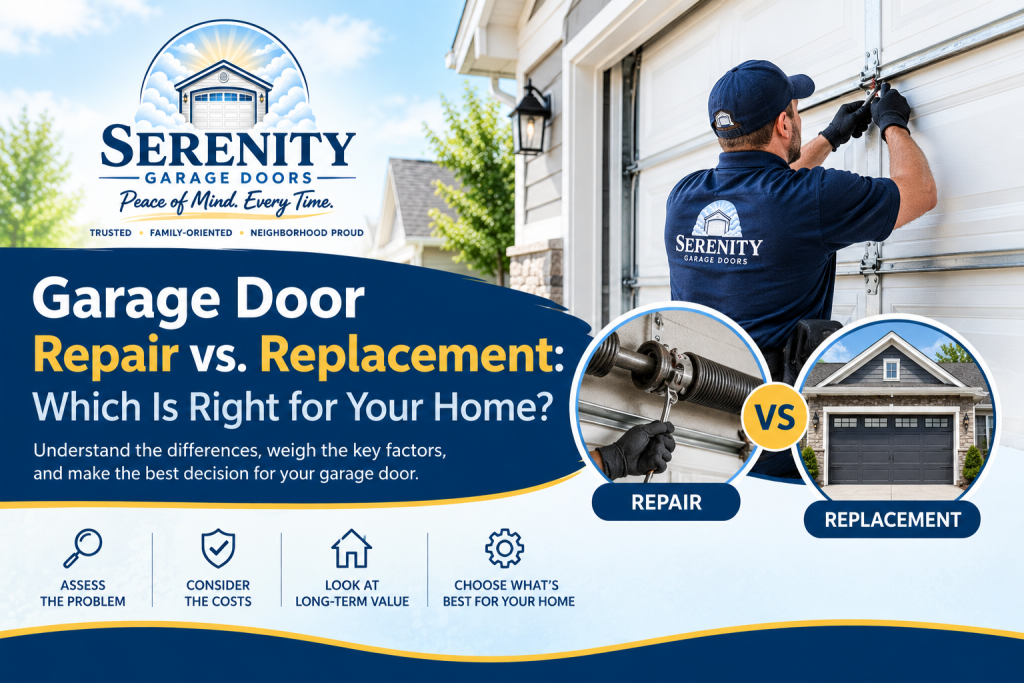
A garage door problem does not always mean it is time for a completely new door. A broken spring, worn roller, damaged cable, or isolated panel issue can often be handled with a targeted repair. However, an aging door with structural damage, repeated failures, or declining performance may make replacement the more practical investment.
Understanding garage door repair vs. replacement means looking at the complete system instead of reacting to one broken component. Door age, repair history, safety, insulation, appearance, operating performance, and future maintenance costs all matter. The goal is to determine whether the existing door still has useful service life or whether a new system would provide better value.
Garage Door Repair vs. Replacement: Where Should You Start?
The best starting point is identifying the source and extent of the problem. Garage door repair focuses on correcting a specific issue while keeping the existing door and most of its components. This may involve replacing springs, cables, rollers, hinges, tracks, weather seals, or opener components.
Replacement is a much broader process. The existing door is removed and replaced with a new system when continued repairs no longer make practical sense. Extensive deterioration, multiple damaged sections, outdated construction, poor insulation, or recurring mechanical failures can all influence that decision.
A relatively newer door with one failed component may only need a straightforward repair. An older door that has required several repairs may deserve a closer replacement comparison. Looking at the entire system gives you a better basis for making the right choice.
When Is A Garage Door Repair Enough?
Many garage door problems are isolated and can be corrected without replacing the entire door. If the panels remain solid and the frame, tracks, hardware, and other major components are in reasonable condition, repair may be the most sensible option.
Common repair situations include:
- Broken garage door springs
- Damaged garage door cables
- Worn rollers
- Bent or misaligned tracks
- Faulty hinges
- Loose hardware
- Minor panel damage
- Garage door opener problems
- Normal mechanical wear
For example, a torsion spring can snap suddenly and leave the door stuck. That does not automatically mean the entire garage door has reached the end of its service life. If the panels and supporting hardware remain strong, replacing the spring may restore normal operation.
The same applies to worn rollers and cables. These parts experience regular movement and are expected to wear over time. Replacing a failed component can extend the useful life of an otherwise dependable residential garage door.
Understanding garage door repair vs. replacement becomes easier when the existing door is still structurally sound, and the problem is limited to a serviceable component.
Is Your Garage Door Starting To Cost More Than It Should?
One repair is very different from a pattern of repeated repairs. A single broken spring may be an ordinary maintenance issue, while a door that repeatedly needs springs, rollers, cables, tracks, and other components may be showing broader signs of wear.
Replacement deserves consideration when you are dealing with:
- Multiple damaged panels
- Extensive structural deterioration
- Significant rust or corrosion
- Frequent spring or cable failures
- Repeated track or roller problems
- Ongoing opener issues
- Increasing repair expenses
- Poor insulation
- Recurring safety concerns
- Unreliable daily operation
Imagine repairing one worn roller today and dealing with another major component several months later. Each repair may solve an immediate problem, but the accumulated garage door repair cost can eventually become difficult to justify.
That is when looking at the door as a complete system becomes important. If several components are approaching the end of their service life, putting more money into individual repairs may not offer the same value as replacing the door.
Warning Signs That Point Toward Replacement
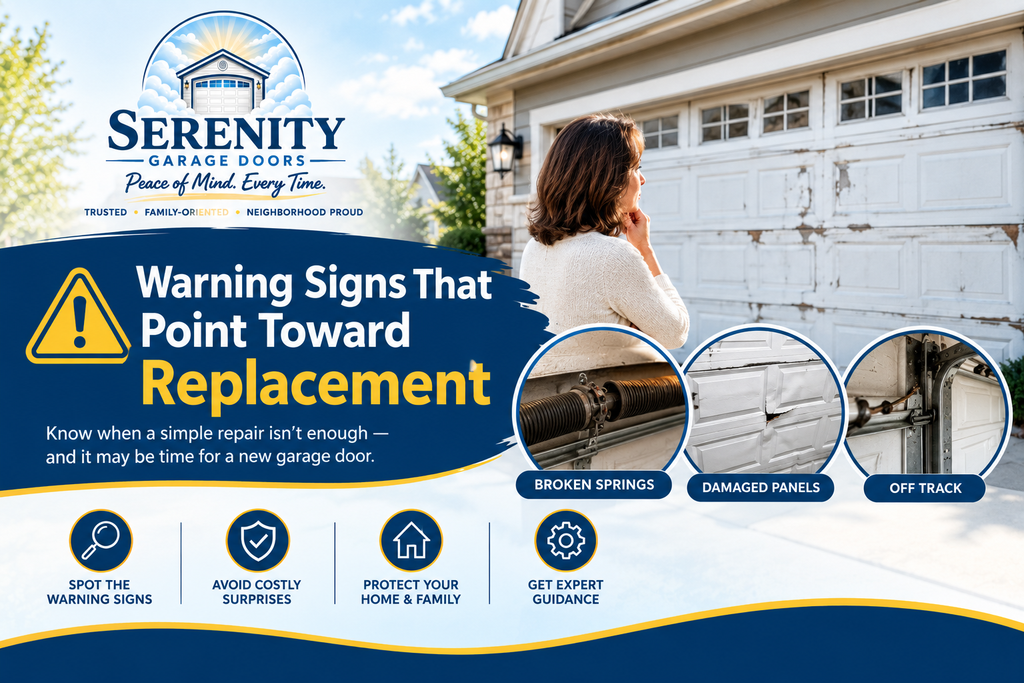
Certain problems suggest that the issue goes beyond one repairable component. These signs do not automatically mean a new garage door is required, but they indicate that the entire system should be evaluated.
Extensive Structural Damage
A severely bent frame, damaged door sections, or compromised structural components can affect alignment, movement, and safety. Minor dents are generally less concerning than damage that changes the strength or shape of the door.
When structural problems are widespread, repairing individual sections may only provide a temporary solution. A replacement can address the broader condition of the door rather than treating separate problems one at a time.
Multiple Damaged Panels
A single damaged panel can sometimes be repaired or replaced. When several panels are damaged, matching sections can become difficult, particularly on older garage doors.
Multiple damaged sections can also affect appearance, balance, and overall door performance. A complete replacement may provide a cleaner and more dependable result when panel damage extends across much of the door.
Frequent Repairs
A long repair history is an important factor in the garage door repair or replacement decision. Repeated service involving springs, cables, rollers, tracks, panels, and hardware may indicate that the system is aging as a whole.
Instead of considering every repair separately, look at the pattern. Frequent failures can signal that continued maintenance is becoming less economical, particularly when the same door keeps developing new problems.
Widespread Rust And Corrosion
Small areas of surface rust may not justify replacement. Extensive corrosion is more serious because it can weaken metal sections and hardware.
If rust has spread across multiple areas, repairing individual spots may not address the underlying deterioration. The overall condition of the door should be considered before deciding how much additional money to put into repairs.
Poor Insulation
Older garage doors may provide limited insulation compared with newer insulated models. If the garage is attached to living areas or used as a workspace, better insulation can make replacement more appealing.
A modern insulated door can provide an opportunity to improve thermal performance while upgrading the overall system. Insulation needs should be considered alongside door condition and long-term use.
Outdated Appearance
A garage door occupies a significant portion of many home exteriors. Faded finishes, outdated designs, dents, and visible wear can affect the property’s curb appeal.
Replacement can combine a functional upgrade with a noticeable exterior improvement. New materials, finishes, window configurations, and design options can also create a better match for the home’s existing exterior.
The Real Cost Behind Garage Door Repairs
The garage door repair cost varies according to the failed component, replacement parts, labor, accessibility, and complexity of the work. A broken spring requires different service from a damaged track, worn rollers, or a malfunctioning opener.
The condition of surrounding components also matters. A technician may find that one part has failed while the rest of the system remains strong. In another situation, several parts may show wear at the same time.
This distinction is important when deciding between repair and replacement. A focused repair can be a practical investment when the door is structurally sound. When several major repairs are necessary, comparing the combined repair expense with garage door replacement cost provides a more realistic picture of long-term value.
Comparing repair expenses with replacement options makes garage door repair vs. replacement a more practical long-term decision.
What Goes Into A Garage Door Replacement?
The garage door replacement cost depends on more than the door itself. Size, material, design, insulation, hardware, opener requirements, removal of the existing system, and installation all influence the overall investment.
A basic residential garage door has different requirements from a custom insulated model with upgraded hardware and design features. The type of garage, opening dimensions, existing equipment, and desired appearance can also affect the replacement process.
Long-term performance should also be considered. A new door may offer better insulation, updated safety features, smoother operation, improved durability, easier maintenance, and a refreshed appearance.
The goal is not simply to purchase a newer door. It is to select a system that fits the property’s needs and provides useful value over its expected service life.
Why Door Age Matters When Comparing Your Options
There is no universal age at which every garage door should automatically be replaced. Usage, weather exposure, maintenance, installation quality, material, and operating conditions all affect service life.
An older door may still be worth repairing when the panels remain strong, hardware is in good condition, and failures are occasional. Age becomes more significant when it is combined with repeated breakdowns, rust, deteriorated hardware, poor insulation, and increasing maintenance costs.
This makes when to replace garage door decisions more about condition than a specific number of years. The repair history can often reveal more than the door’s age alone.
Door age should always be considered as part of the garage door repair vs. replacement decision, especially when maintenance costs are increasing.
Panel Damage: Repairable Problem Or Bigger Concern?
Garage door panel damage can range from a small dent to a severely bent or compromised section. Minor cosmetic damage may be repairable, while significant damage may require panel replacement.
A single damaged panel does not automatically mean the complete door needs to be replaced. If the surrounding sections remain strong and a compatible panel is available, replacing one section can be a practical solution.
The situation changes when several panels are damaged or the original door design is discontinued. Finding a matching section for an older system may become difficult, with differences in color, profile, insulation, or finish.
The surrounding condition of the door should therefore be considered before deciding between garage door damaged panel repair or replacement. Matching the existing door, maintaining balance, and preserving dependable operation are all important factors.
The Garage Door Opener Is A Separate Decision
The garage door opener can develop problems even when the door itself remains in good condition. Motor issues, worn drive components, electrical faults, excessive noise, and outdated safety features can all affect opener performance.
For a garage door opener repair vs replacement decision, consider the opener’s age, repair history, reliability, noise level, safety features, and compatibility with the existing door.
An opener with one isolated fault may be worth repairing. A unit that repeatedly fails or has become outdated may be better replaced.
The condition of the garage door itself should also be checked. A new opener will not solve problems caused by broken springs, poor balance, damaged tracks, or structural deterioration.
Making The Right Choice In Milton, GA
For homeowners considering garage door repair in Milton, GA or garage door replacement in Milton, GA, the decision should begin with the condition of the existing system.
A complete assessment can consider the panels, springs, cables, rollers, tracks, hinges, hardware, opener, balance, and overall operating performance. This helps distinguish an isolated repair from a larger pattern of deterioration.
If the door has a strong structure and one worn component is causing the problem, a focused repair may preserve its remaining service life. If several parts are failing or the door has substantial structural damage, residential garage door replacement may provide a more dependable solution.
A new garage door can also introduce better insulation, updated safety features, modern design, smoother operation, and improved durability. For property owners in Milton, understanding garage door repair vs. replacement can make it easier to choose an option that fits the door’s condition and long-term needs.
Frequently Asked Questions
Should I Repair Or Replace My Garage Door?
Repair is generally suitable when the main structure remains strong and the problem involves a replaceable component. Replacement may be more practical when the door has extensive damage, repeated failures, or several aging components.
Is It Cheaper To Repair Or Replace A Garage Door?
A single repair is generally less expensive than complete replacement. However, repeated repairs on an aging door can add up, making it worthwhile to compare the accumulated costs with a new system.
How Do I Know If My Garage Door Needs To Be Replaced?
Look for structural damage, multiple damaged panels, widespread rust, repeated repairs, poor insulation, outdated hardware, and ongoing operating problems. Several of these signs together may indicate that replacement deserves consideration.
When Should You Replace A Garage Door?
Replacement may make sense when the door becomes unreliable, unsafe, expensive to maintain, or difficult to restore. Age is one factor, but condition and repair history are equally important.
Is Garage Door Repair Worth It?
Repair can be worthwhile when the garage door is structurally sound and the problem is limited to one or a few components. A focused repair may extend the useful life of an otherwise dependable door.
How Old Should A Garage Door Be Before Replacing It?
There is no fixed replacement age for every garage door. A well-maintained door can remain useful for many years, while an older system with recurring failures and deterioration may benefit from replacement sooner.
Is A Damaged Garage Door Panel Better Repaired Or Replaced?
Minor or localized damage may be repairable. A severely damaged section may require panel replacement, while multiple damaged panels or unavailable matching sections can make complete door replacement more practical.
Should I Repair Or Replace My Garage Door Opener?
An opener with an isolated fault may be worth repairing. Replacement can make more sense when the opener is outdated, repeatedly failing, excessively noisy, or missing important modern safety features.
Choose The Option That Fits Your Garage Door
Choosing between garage door repair and replacement starts with understanding the condition of the entire system. Serenity can assess the springs, cables, rollers, tracks, panels, opener, hardware, and overall operation to determine the source of the issue. If the door remains structurally sound and only one component has failed, a targeted repair may restore reliable performance without replacing the complete system. When damage, wear, or repeated repairs affect multiple areas, a new door may offer better durability, insulation, safety, and long-term value. Each recommendation should consider the door’s age, repair history, maintenance requirements, and expected service life. For dependable garage door service in Milton, GA, Serenity can help identify the option that best suits your property.
Related Garage Door Services
Garage Door Replacement
Garage Door Panel Replacement
Garage Door Panel Repair
Garage Door Roller Repair
Garage Door Track Repair